Kraamzorg in the Netherlands: A Guide for International Families
Discover how kraamzorg works in the Netherlands, what to expect during the first days after birth, how much it costs, and how to choose a provider for your family.
PARENTING ABROAD
10/15/20268 min read


Kraamzorg in the Netherlands: A Guide for International Families
If you're expecting a baby in the Netherlands, you've probably already discovered that the Dutch maternity care system works a little differently from what you might be familiar with. Midwives often work outside hospitals, home births are a recognised option, and after your baby arrives, a maternity care professional can come into your home to support you during those first days.
This last part is called kraamzorg, and it's one of the most distinctive aspects of maternity care in the Netherlands.
For international families, the idea can raise quite a few questions. Who is this person coming into your home? Are they there to look after the baby, help with the housework, or provide medical care? How does it work alongside your midwife, and how do you arrange it when you're still learning your way around the Dutch healthcare system?
This guide explains how kraamzorg works in practice, what is covered by Dutch health insurance, and what to consider when choosing a provider.
What is kraamzorg, and how does it work?
Kraamzorg is professional maternity care provided during and after childbirth, usually in your own home. It is part of the Dutch maternity care system and focuses on the mother's recovery, the health and wellbeing of the newborn, and supporting parents as they learn to care for their baby.
The professional providing this care is called a kraamverzorgende. Their responsibilities include observing the health of mother and baby, supporting feeding, providing practical assistance and guiding parents through newborn care.
To understand kraamzorg, it helps to know how responsibilities are divided within the Dutch healthcare system.
Unlike in countries where an obstetrician or paediatrician may oversee routine postnatal care, in the Netherlands your midwife (verloskundige) usually remains your primary maternity healthcare professional during the first days after birth, including after hospital birth.
Your kraamverzorgende works alongside the midwife, carrying out daily observations and reporting any concerns. The midwife remains responsible for clinical assessments and decisions, including whether additional medical care is needed. If you give birth at home or in a midwife-led birth setting, a kraamverzorgende may also assist during labour. This is called partusassistentie, and the midwife contacts the kraamzorg provider when assistance is required.
After the kraamweek, the responsibility for routine medical care gradually shifts to your GP (huisarts), while the consultatiebureau provides preventive child healthcare, including growth and development monitoring, vaccinations and parenting guidance.
The consultatiebureau is not a paediatrician's practice. Most healthy babies in the Netherlands do not routinely see a paediatrician unless there is a medical reason or referral.
What happens during the kraamweek?
Feeding support is another important part of kraamzorg. Whether you're breastfeeding, formula feeding or combining both, your kraamverzorgende can help you understand feeding cues, recognise what is normal in the first days and work through common challenges. More complex feeding difficulties may require support from a lactation consultant or another healthcare professional.
Alongside these observations, your kraamverzorgende helps you learn everyday newborn care, including bathing, changing nappies, dressing your baby and safe sleeping practices. Practical household assistance is also included, although kraamzorg is not a general cleaning service. Tasks usually focus on hygiene and the immediate needs of mother and baby, such as keeping the bathroom and baby care areas clean, changing bedding, laundry and preparing simple meals.
The balance between these activities depends on the number of hours available and what needs attention that day.
Your midwife will also visit during the kraamweek to assess recovery and discuss any medical concerns. Your kraamverzorgende shares observations with the midwife, so the two professionals can coordinate your care.

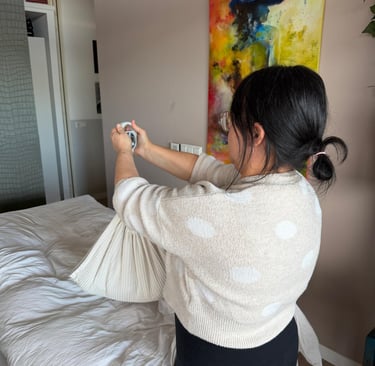
The first days after birth are known as the kraamweek. During this period, your kraamverzorgende visits your home for an agreed number of hours each day.
There isn't one fixed daily routine that applies to every family, but there are standard health observations and care responsibilities that form the basis of kraamzorg.
A typical visit often begins with discussing how the previous hours have gone. Your kraamverzorgende will ask about feeding, sleep, nappies, your recovery and any concerns that have come up since the previous visit.
For the mother, observations may include uterine recovery, temperature, healing after birth and general physical wellbeing. Your kraamverzorgende will also pay attention to your emotional recovery and identify concerns that may need to be discussed with the midwife.
For the baby, daily care includes monitoring feeding, weight, temperature, skin colour, nappies and general wellbeing. These observations help identify possible concerns, such as jaundice, feeding difficulties or excessive weight loss, so that the midwife can assess them when necessary.
How many hours of kraamzorg will you receive?
Under Dutch basic health insurance, the standard entitlement is generally between 24 and 80 hours of kraamzorg, depending on your circumstances.
The number of hours is determined using the Landelijk Indicatieprotocol Kraamzorg (LIP), a national protocol used to assess the care needed by mother and baby. An initial indication is made during pregnancy, usually around the kraamzorg intake. After birth, the hours are reassessed based on your actual situation. For example, a family with an uncomplicated birth and recovery may receive a standard allocation, while complications, feeding difficulties or other circumstances may lead to additional hours being indicated. Hospital stays can also affect the number of hours available at home. If you remain in hospital after birth, the days of hospital care are taken into account when determining your remaining kraamzorg.
The standard kraamweek generally covers the first eight days, counting the day of birth as day one. Depending on the circumstances, care can continue beyond this period when medically indicated. Your allocated hours are divided across the days of care. You may have longer visits at the beginning of the kraamweek and shorter visits towards the end, depending on your care plan.
It's worth distinguishing between the hours you are entitled to and the hours a provider can actually deliver. Due to staffing shortages in parts of the Netherlands, some organisations may not always be able to provide the full indicated number of hours. If this happens, your provider should explain how care will be organised and which essential care activities will be prioritised.
How much does kraamzorg cost in the Netherlands?
Kraamzorg is included in the Dutch basic health insurance package (basisverzekering). This means that the costs of medically indicated kraamzorg are largely covered for people insured under the Dutch healthcare system.
However, families usually pay a statutory hourly contribution, called the eigen bijdrage. In 2026, the contribution for kraamzorg at home is €5.70 per hour. For example, if you receive 40 hours of kraamzorg, your contribution would be €228.
Kraamzorg is exempt from the mandatory health insurance deductible (eigen risico). However, the hourly contribution (eigen bijdrage) is a separate payment and does not count towards your annual deductible. Some supplementary health insurance policies (aanvullende verzekering) cover this contribution, either partially or in full.
Health insurance conditions and statutory contributions can change each year. If you're expecting a baby in 2027, the statutory contribution (eigen bijdrage) for kraamzorg at home will be €6.00 per hour. Check your insurer's 2027 policy for supplementary coverage and reimbursement conditions.
There are a few additional details worth checking with your insurer:
Contracted and non-contracted providers
Not every kraamzorg provider has a contract with every health insurer. If you choose a non-contracted provider, your policy may reimburse a lower percentage of the costs, leaving you with additional expenses beyond the statutory contribution.
Hospital births and birth centres
If you choose to give birth in hospital or at a birth centre without a medical indication, separate contributions may apply. These are different from the hourly contribution for kraamzorg at home and depend on the circumstances and your insurance policy.
International health insurance
If you are covered by international or private health insurance rather than Dutch basic insurance, you will need to check whether kraamzorg is included and how reimbursement works.


When and how should you register for kraamzorg?
Kraamzorg is something you arrange separately from your midwifery care. Registering with a midwife does not automatically register you for kraamzorg.
It is advisable to start looking for a provider early in pregnancy, preferably during the first trimester. Many organisations recommend registering before 16 weeks, particularly in areas where availability is limited.
You can register directly with a kraamzorg organisation or an independent kraamverzorgende. Your midwife may suggest providers in your area, and your health insurer can help you identify organisations contracted under your policy.
Once you've registered, your provider will usually arrange an intake appointment during pregnancy. Depending on the organisation and your circumstances, this may take place at home, by telephone or online.During the intake, you'll discuss your health, previous birth experiences, home situation, feeding intentions and any factors that may influence the care you need. The provider will also explain how the kraamweek is organised and what practical arrangements need to be made before birth.
What happens when labour begins?
If you're giving birth at home or in a midwife-led birth setting, your midwife contacts the kraamzorg provider when birth assistance is needed. You do not need to arrange the arrival of the kraamverzorgende yourself for this purpose. If you give birth in hospital, kraamzorg at home usually starts after discharge. Depending on your provider's procedures, you or your partner may need to notify them when you're going home.
Because hospital discharge can happen relatively quickly after an uncomplicated birth, it's useful to know in advance how and when your provider wants to be contacted.
How do you choose a kraamzorg provider?
There are different ways to arrange kraamzorg in the Netherlands. You can register with a larger kraamzorg organisation or choose an independent kraamverzorgende who works directly with families.
Larger organisations generally employ teams of maternity care professionals and coordinate their availability through a central planning system. Depending on staffing and scheduling, you may receive care from one or several kraamverzorgenden during your kraamweek.
Independent kraamverzorgenden usually arrange care directly with their clients and may offer the possibility of working with the same professional throughout the kraamweek. However, availability, replacement arrangements and the way backup care is organised can vary.
When comparing providers, there are several practical questions worth asking:
Do you cover my postcode, and do you have availability around my due date?
Can I receive care in English or another preferred language?
Will I have one kraamverzorgende or potentially several?
Will I meet my kraamverzorgende before the birth?
What happens if my baby arrives early or late, or if my provider is unavailable?
Do you have a contract with my health insurer?
Some providers offer additional services alongside standard kraamzorg, while others focus exclusively on the care included under basic health insurance. If you're interested in additional support, ask what is included in the insured hours and what would be arranged or charged separately.


Kraamzorg organisations in Hilversum, 't Gooi and surrounding areas
If you're looking for kraamzorg in Hilversum, 't Gooi or the surrounding region, several larger organisations operate in this part of the Netherlands, including:
You can visit their websites to check whether they cover your postcode, explore their services and find information about registration. Availability may vary depending on your location and expected due date.
You can also search for independent kraamverzorgenden working in your area. When choosing any provider, it's worth confirming their insurance arrangements and what happens if they cannot provide care themselves.
Looking for English-speaking kraamzorg in the Netherlands?
At Juno Births, I offer personalised, holistic kraamzorg for international and Dutch families in Hilversum, 't Gooi, Utrecht and surrounding areas.
Alongside standard kraamzorg, I offer the possibility of support during pregnancy and birth, allowing families to arrange continuity of care across different stages of their maternity journey.
If you're expecting a baby and would like to find out more about my services and availability, you're welcome to get in touch.


Community
Find Support by following me on social media. Join our online community
Contact:
E-mail: valentina@junobirths.nl
Phone: +31 6 23480540
© 2026. All rights reserved.
KVK 84451866


Valentina Zago-Binnendijk